
Is this you?
If you’ve been wondering if it’s
just you. It’s not.
It’s a pattern most successful overachievers share. Saying yes out of guilt and obligation. Overfunctioning at home and at work. Exhausted, resentful, and not sure why.
Once you see the pattern, you stop letting it run your life.

Tap the ones that sound like you.
That’s 0 of 7.
If you checked more than a couple, keep reading.

Guilt and obligation drive most of your decisions.
You say yes because you would feel guilty if you didn’t. Not doing what a good mom, daughter, wife, or friend “should” do seems unimaginable.
You have no bandwidth for a long conversation, but you answer your friend’s call anyway.
You stay on the phone longer than you want because hanging up or saying “not right now” would make you feel guilty.
Overfunctioning and the resentment that follows
This is overfunctioning. You take on too much, don’t ask for help, and end up resentful.
You pick up the slack at home and at work and end up exhausted because you believe good moms and employees have to self-sacrifice.
You believe you should be able to handle everything.
As a result, you don’t delegate, even when you’re overwhelmed, because it is easier to do it yourself than explain. Besides, you’d do it best.
Asking for help feels weak, like failure, or like being a burden. And yet you feel resentful that no one notices how much you are doing.
Someone helps, but not the “right” way, so you redo it yourself and feel even more frustrated.
Why you feel guilty when you rest
Resting feels wrong. Rest feels lazy, unproductive, or like something you have to earn. Even when you finally sit down, you can’t fully relax.
The idea of slowing down feels impossible, as if things might collapse if you do.
You also replay the day in bed and beat yourself up. Your mind can’t quiet down. And you scoff at self-care or shavasana as a waste of time.
You sit down to relax and immediately reach for your phone, your mind racing through everything you “should” be doing instead.

This is self-abandonment.
You act like your needs don’t matter, then feel hurt when no one treats them like they do.
You overfunction for everyone else, don’t ask for what you need, and end up feeling unseen and unsupported.
You give up your own plans to make things easier for someone else, then feel hurt that no one thought to do the same for you.

You compare yourself to others and also judge other women for what you secretly want.
You assume other women have it more together.
And you roll your eyes at someone who seems relaxed or carefree, secretly wishing you could let go the way she does.
If you see yourself in this, you don’t need more advice. You need help changing the Overachiever patterns that keep you stuck.
It might feel like these are unrelated issues. They’re not.
Guilt fuels overfunctioning. Overfunctioning breeds resentment. Resentment leads to emotional exhaustion. And exhaustion sends you right back into guilt.
This is the Overachiever pattern, and it’s why nothing changes when you try to fix one piece at a time.
There’s nothing wrong with you for doing this.
You learned to act this way because it allowed you to survive and even thrive.
Being the one who gained acceptance through good grades, who didn’t need much, and who learned to be a good girl to please others probably worked for you.
This is “good girl” conditioning, and self-abandonment is how you survived it.
Being an overachiever got you where you are today. But now it’s costing you.
The good news is there is a different way to combine success and a happier life. You don’t need to quit your job or uproot your life.
You can make internal shifts first in order to show up in the same life differently, preserving both your energy and well-being AND your relationships with everyone you care about (unless you decide that what has been is no longer acceptable).
Because you deserve to have the life you would enjoy.
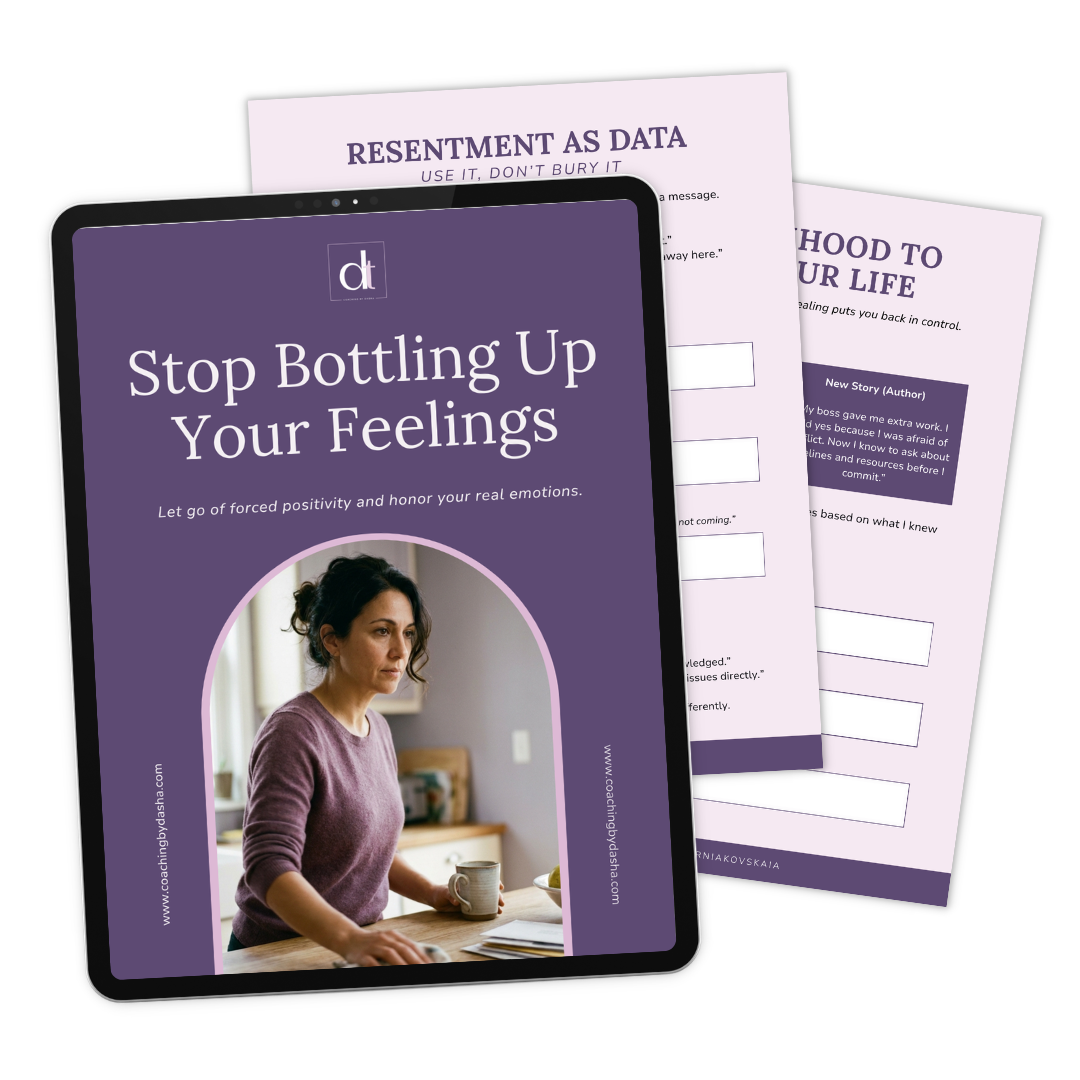
Before you go any further.
If you are fake-smiling while seething with resentment, start here.
Toxic positivity that tells you to just let it go or stay in a high vibe is not helpful.
The Stop Bottling Up Your Feelings toolkit gives you the language for how to process your feelings quickly and how to stop waiting for others to change so that you can feel better.
Get the toolkitHover or tap a card to see what shifts.

When podcasts, articles and Instagram quotes don’t change much.
If you read all of this and recognized yourself, the next step isn’t more information. It’s a real conversation.
Book a discovery call and we’ll talk about where you’re stuck and whether working together is the right way through it.
Book a discovery call